
Nocentry Features End-to-End Monitoring and Incident Response
Nocentry combines detection, alerting and incident context in one platform so teams can move from signal to resolution with less operational friction.
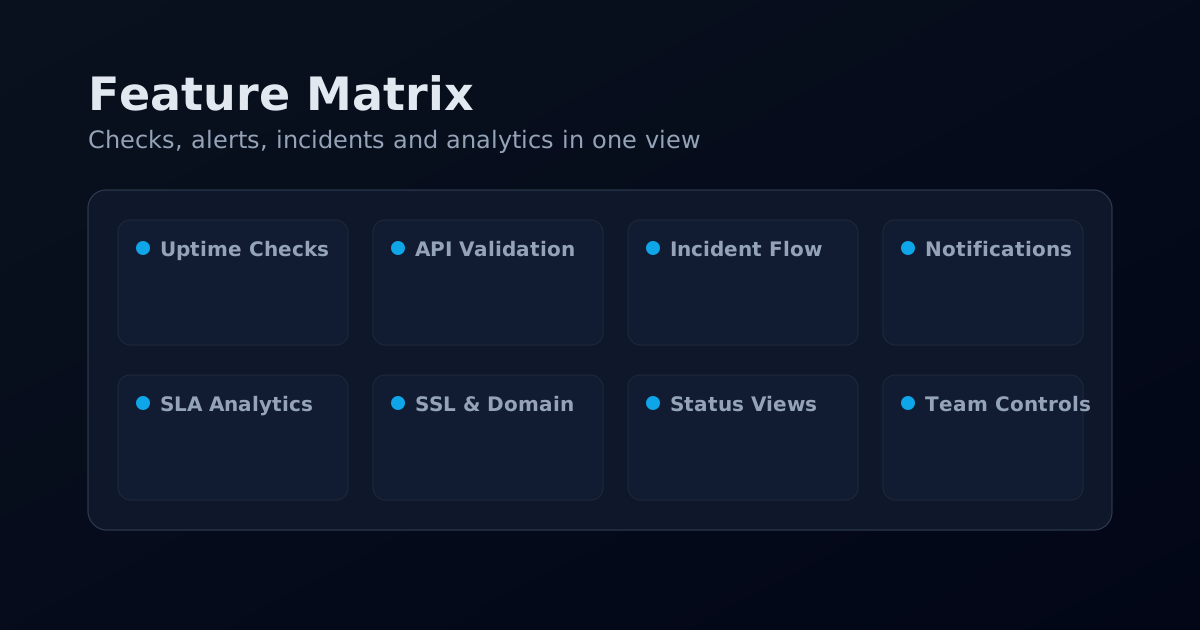
Unified monitor coverage
Run the most important monitor types in one workspace: Website, API, Ping, Port, DNS, SSL and Domain checks. This keeps reliability control centralized as infrastructure grows.
- Availability and latency checks for websites and endpoints
- API assertions for status, payload and response behavior
- Network-level validation through ping and port monitoring
- DNS, SSL and domain safeguards for configuration and expiration risk
Operational controls for growing teams
Feature modules focused on reducing alert fatigue and improving response quality.
Multi-location checks
Validate events from multiple regions to separate localized routing issues from global service outages.
Response time alerts
Trigger alerts on latency degradation, not only complete downtime events.
Incident management tools
Track, filter and resolve incidents with explicit status changes and full event chronology.
Role-based team access
Assign scoped permissions for engineering, support and operations with predictable governance.
Maintenance windows
Schedule planned work without unnecessary alerts and keep reliability metrics focused on unplanned issues.
Status pages and communication
Provide transparent service communication for customers and internal teams during active incidents.
- Public and private visibility options
- Structured incident update history
- Lower inbound support pressure during outages
Integrations and mobile control
Route alerts into existing workflows and maintain control from both desktop and mobile environments.
- Notification routing into chat and incident-response channels
- Response continuity outside standard office hours
- Faster acknowledgement and coordination on active events
Operational outcomes
Combined together, these capabilities help teams detect issues earlier, resolve incidents faster and improve uptime strategy with historical evidence.