
Status Pages - Incident Visibility and Communication Flow
Status communication should mirror incident reality in real time: what failed, what is being done now, and when recovery is confirmed.
Status page communication tied to incident lifecycle
Nocentry incident flow already captures active and resolved states, timestamps, cause context and event history. The status communication layer should expose this data in a clear, predictable format for all stakeholders.
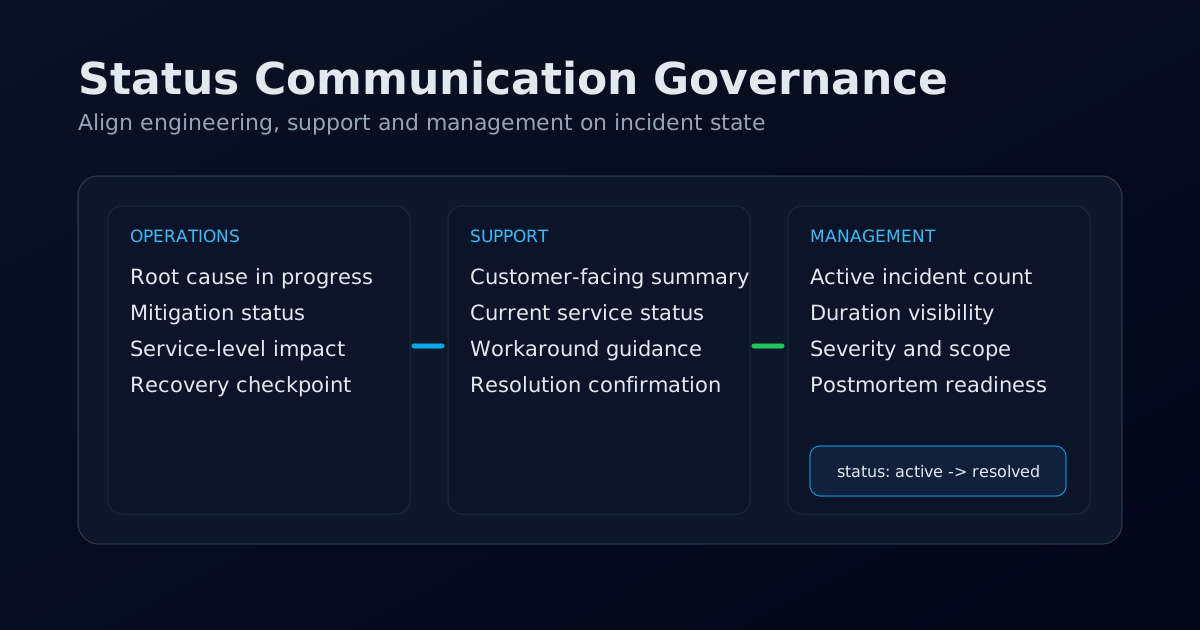
This reduces ambiguity during outages and keeps support, operations and management aligned on the same current incident state.
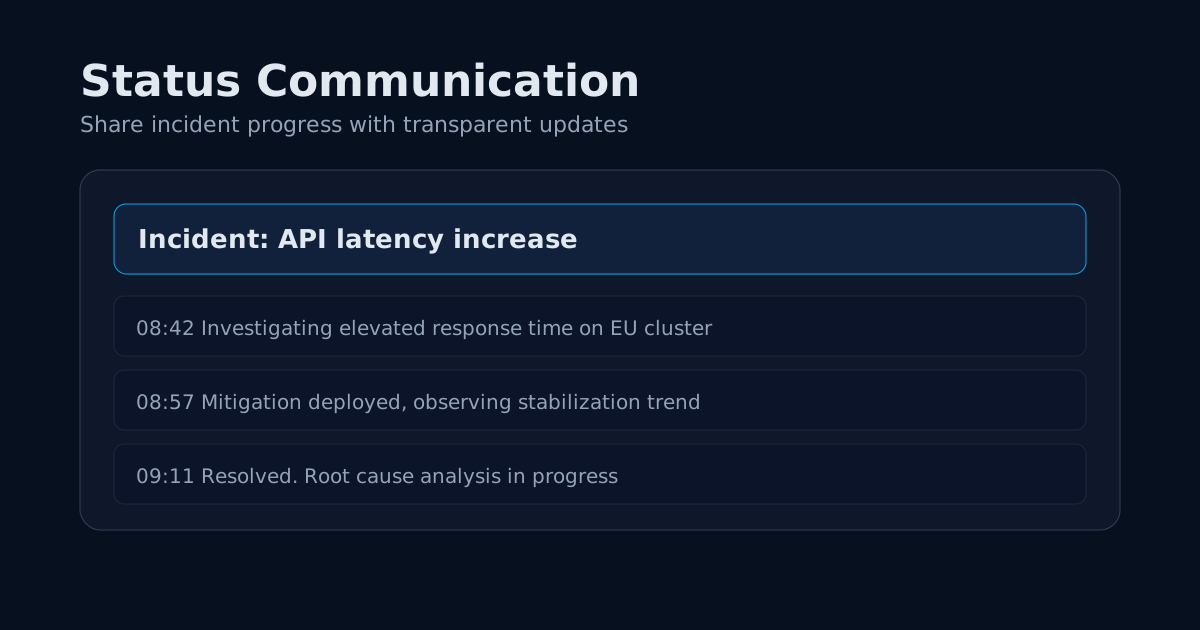
Update sequence from detection to recovery
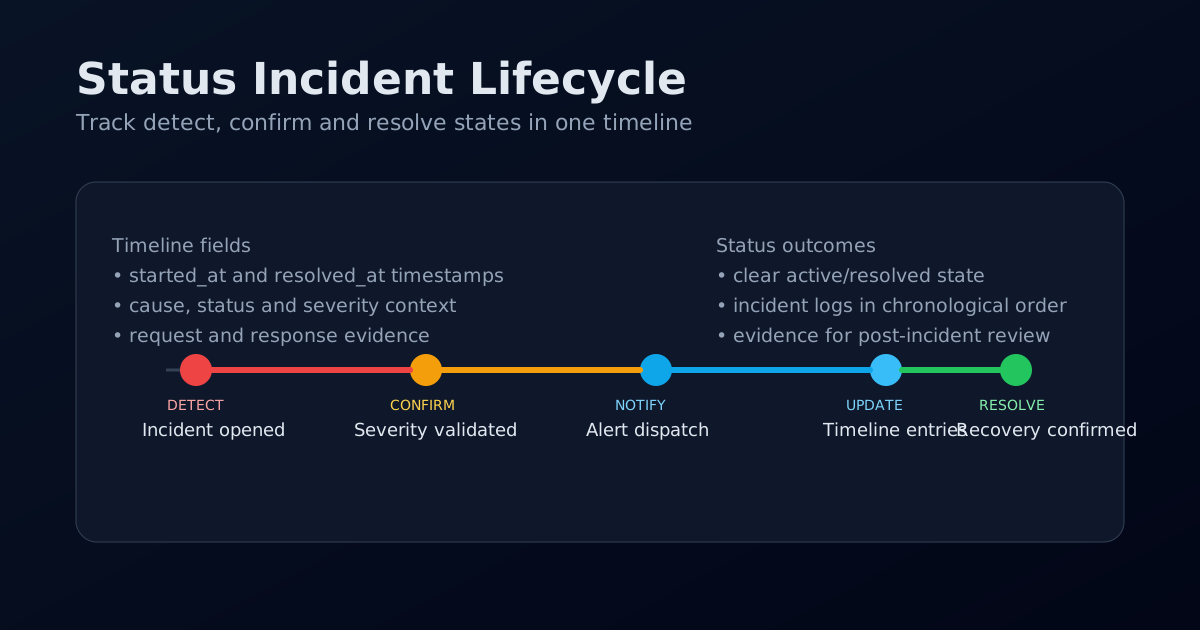
Status updates work best when they follow deterministic milestones: incident detection, validation, mitigation, and final recovery confirmation.
Using this sequence keeps internal responders and customer-facing teams synchronized throughout the incident window.
Status communication capabilities
Incident context integrity
- Status entries are linked to real incident state transitions
- Service name, type and cause stay visible during active events
- Request/response evidence supports deeper incident detail
Timeline clarity
- Updates are ordered chronologically for fast situational awareness
- Started and resolved times make duration explicit
- Active incident count supports portfolio-level visibility
Stakeholder alignment
- Operations, support and leadership share one source of status truth
- Recovery messages close the communication loop
- Noise is reduced with state-based messaging discipline
Operational governance
- Incident logs support post-incident review and reporting
- Notification history tracks repeated and final messages
- Structured state model scales with service growth
Typical status communication use cases
- Communicating API and website disruptions to support teams
- Coordinating internal incident response across multiple owners
- Providing clear recovery updates after mitigation
- Building incident records for reliability reporting
Status pages FAQ
What should a status update include first?
Start with incident state, affected scope and current response step. This prevents ambiguity and speeds alignment.
How often should updates be published during incidents?
Publish updates at each meaningful state change: detection, mitigation progress, and final recovery confirmation.
Why is explicit resolved status important?
It closes the incident loop for support and business teams and avoids prolonged uncertainty after technical recovery.
How does this relate to monitoring alerts?
Monitoring detects and routes incidents; status communication translates that lifecycle into clear stakeholder updates.
Need a structured communication model for reliability operations? Review plans or contact our team for rollout guidance.